

Muslim Friendly Places to Visit in Japan: Classic Sights
Last checked: 5 Nov 2026
Japan's most famous sights are very doable for Muslim travellers. The temples, shrines and castles welcome visitors of any faith, you can simply look around without joining any ritual, and in most big sightseeing areas there is now a mosque or prayer room within reach. This guide to Muslim friendly places to visit in Japan goes city by city, with the nearest prayer places, food tips, the best time to go and the etiquette that matters.
Use it together with the prayer-times pages for each area, because prayer times shift a lot between Tokyo, Kyoto and Hiroshima and through the seasons. Opening hours and prices change, so check each official site before you go.
How to plan a classic Japan trip around salah
A popular first trip is the "golden route": Tokyo, a day trip to Mt Fuji or Hakone, then Kyoto, Nara and Osaka, with Hiroshima, Miyajima and Himeji as add-ons. Many sights take two to four hours, so treat each prayer time as a fixed stop and build the sightseeing around it.
- Check the times the night before. Open the prayer-times page for the city you will be in, for example Tokyo prayer times or Kyoto prayer times. In autumn and winter the gap between Dhuhr and Asr is short, and Maghrib comes early.
- Pair each big sight with a prayer place. Below we give the nearest verified option for each sight. Where there is none, pray before you set off or at a station or mall on the way.
- Carry a light prayer kit. A compact mat, a compass or qibla app and a small towel make it easy to pray in a multi-purpose room or a quiet corner you have asked to use. Our guide on how to find a place to pray in Japan explains how to ask staff politely.
Etiquette at temples and shrines
Buddhist temples (tera, -ji) and Shinto shrines (jinja, jingu, taisha) are working religious sites, but they are also open to the public as cultural heritage. Official sites such as Meiji Jingu and Todai-ji state that visitors may walk around and simply look, without taking part in worship. Many Muslims choose to enjoy the architecture, gardens and history and skip the rituals such as washing at the purification basin, bowing, ringing bells, burning incense or buying charms.
A few rules come up again and again on the official sites:
- Keep your voice down and do not block narrow paths with group photos.
- Do not eat while walking. Kiyomizu-dera asks visitors not to eat or drink outside its cafes and tea houses, and Fushimi Inari Taisha allows eating and drinking only in marked rest areas.
- Take your rubbish with you. Bins are rare at religious sites.
- Shoes off where asked. Some halls, such as Sanjusangen-do, and castle keeps, such as Himeji Castle, do not allow outdoor shoes. Socks you are happy to walk in help a lot.
- Photo rules differ. Meiji Jingu does not allow photos or video in front of the main sanctuary, and Todai-ji does not allow tripods or flash.
Loose clothing that covers the arms and legs suits all of these sites, and slip-on shoes save time.
Food at the big sights
Street food is part of the fun at many famous sights, but it often contains pork, lard, sake or mirin (sweet rice wine). Ask before you buy, and use our guide to reading food labels in Japan for the key words. Official tourism bodies publish their own lists of halal and Muslim-friendly restaurants: the TOKYO MUSLIM Travelers' Guide 2026-2027 from the Tokyo Convention & Visitors Bureau, Kyoto's Support for Muslims page, and the JNTO Muslim guide. These are the best places to look for a proper meal near each sight.
Tokyo: Asakusa, Tokyo Skytree, Shibuya and Meiji Jingu
Tokyo has the most prayer options of any Japanese city, so it is the easiest place to start.


Senso-ji and Asakusa
Senso-ji is the heart of Asakusa, with the huge red lantern of Kaminarimon gate and the Nakamise shopping street leading up to the main hall. In front of the hall you will see people wafting incense smoke over their bodies, a Buddhist custom said to bring good health; you can simply watch.
Prayer nearby: the Tokyo Muslim Travelers' Guide lists Dar Al-Arqam Masjid (Asakusa Mosque) at 1-9-12 Higashi-Asakusa, open from Fajr to Isha. JNTO describes the access as a bus from Asakusa Station to the Higashi-Asakusa stop (about 10 minutes) and a 2-minute walk, and notes that water for wudu is available.
Dar Al-Arqam Masjid (Asakusa Mosque)
Tokyo Skytree
Tokyo Skytree is 634 m tall, and on clear days you can see Mt Fuji from the observation deck. The official site says the deck is emptiest first thing in the morning, with weekday afternoons relatively quiet.
Prayer nearby: the official Tokyo Skytree site lists a prayer space on the 1F group floor, with separate spaces for men and women, open to everyone. In Tokyo Solamachi, the shopping complex at the foot of the tower, the Tokyo Muslim Travelers' Guide lists Indian Restaurant Amara on the 6th floor; check the menu with the restaurant.
TOKYO SKYTREE Prayer Space
- Separate spaces for men and women
Shibuya Crossing
Shibuya Scramble Crossing, the Hachiko statue and the SHIBUYA SKY rooftop are a short walk apart. The crossing is at its most dramatic in the evening, which fits well after Maghrib.


Prayer nearby: Shibuya PARCO, about 5 minutes on foot from Shibuya Station, has a free prayer room on the 5th floor with separate areas for men and women (each for about 4 to 5 people) and water for wudu. It follows the building's hours, listed by JNTO as 11:00 to 21:00. Tokyo Camii, one of Japan's largest mosques, is also in Shibuya City, about 5 minutes on foot from Yoyogi-Uehara Station; it holds 500 or more worshippers.
Shibuya PARCO Prayer Room
- Wudu (ablution) area
- Separate spaces for men and women
Tokyo Camii & Diyanet Turkish Culture Center (Mosque)
- Separate spaces for men and women
Meiji Jingu
Meiji Jingu is a large Shinto shrine set in a forest in the middle of the city. The shrine says visitors of any religion may enter. Entry is free, and the gates open around sunrise and close before sunset; in November, for example, the official hours are 6:10 to 16:10, and in December 6:40 to 16:00. A visit to the shrine takes about an hour, or about two hours with the Inner Garden and the museum.
Taking photos or video is not allowed in front of the main sanctuary, where people pray, and eating and drinking are allowed only in designated areas.
Visiting Tokyo Camii: the official site asks for modest dress, a headscarf for women in the Prayer Hall (the upper floor is for women), shoes off, quiet voices and no photos during prayer. It is open daily from 10:00 to 18:00, with general visits on Friday from 14:00. More in our guide to mosques in Japan for visitors.
You can find more rooms, including the Tokyo Station prayer room (10:00 to 17:00, call staff via the intercom), on the Tokyo prayer rooms page.
Mt Fuji, Lake Kawaguchiko and Hakone
Clear days give the best Mt Fuji views, so keep this day trip flexible if you can.


Lake Kawaguchiko
Oishi Park on Lake Kawaguchiko is the classic place to photograph Mt Fuji over seasonal flowers. In autumn, JNTO puts the peak of the maple leaves at the Momiji Corridor in early to mid-November, when the trees are lit up in the evening.
Prayer nearby: Fujikawaguchiko Masjid, a mosque built in 2020, welcomes visitors, and a cafe in the building has menu options for Muslims. JNTO says it is about 20 minutes on foot or under 10 minutes by taxi from Kawaguchiko Station. The mosque's site says Friday prayer starts at 12:45. Fuji-Q Highland, the amusement park nearby, also has a prayer room, and JNTO notes that its food court serves Muslim-friendly food and drinks.
Fujikawaguchiko Masjid
Fuji-Q Highland Prayer Room
Gotemba and Hakone
On the Shizuoka side, Gotemba Premium Outlets has a prayer room with a wudu facility, listed by Shizuoka Prefecture and JNTO. In Hakone, the official tourism information says there are no restaurants specifically for halal diets, but many restaurants will accommodate dietary needs if asked, and some offer halal options if contacted in advance.
Gotemba Premium Outlets Prayer Room
- Wudu (ablution) area
Kyoto: Fushimi Inari, Kiyomizu-dera, Kinkaku-ji and Arashiyama
Kyoto is where prayer planning matters most: its famous sights are almost all temples and shrines, and public prayer rooms are fewer than in Tokyo or Osaka. Kyoto City's official Muslim page lists a small network of places that offer prayer space free of charge, run with the Kyoto Muslim Association.
Fushimi Inari TaishaKyoto→
UNESCO World HeritageKiyomizu-dera TempleKyoto→
UNESCO World HeritageKinkaku-ji (Golden Pavilion)Kyoto→
Arashiyama and SaganoKyoto→
Kyoto prayer places at a glance
- Kyoto Mosque (Masjid Kyoto), near the Imperial Palace. Open Tuesday to Saturday, 12:00 to 18:00, closed Sundays. Friday prayers are held at 12:30, 13:00 and 13:30 (men only). Outside these hours, contact the office in advance.
- Kyoto International Community House (Sakyo-ku). A small room for up to 5 people, 9:00 to 21:00, closed Mondays. No reservation needed.
- Nijo-jo Castle. Ask at the Castle Estate office; you need an admission ticket.
- Kyoto Kimono Rental Yumeyakata, Gojo shop. A small room with a prayer mat and qibla direction; wudu at the sink. The city page describes it as near Kiyomizu, Gion, Higashiyama and Fushimi Inari. Booking ahead is preferred, especially in peak season.
- Yosiya in the Saga-Tenryuji area of Arashiyama. A tatami prayer room with running water for wudu, 11:00 to 17:00, for restaurant customers only.
Hours on this list may have changed, so call or check before relying on one. Our Kyoto prayer rooms page lists the places we have verified, and many travellers also choose a Muslim-friendly hotel with prayer facilities as their base; Kyoto's official Muslim page links to a list of them.
Uzumasa Kyoto Village Prayer Room
Masjid Kyoto / Kyoto Mosque (Kyoto Muslim Association, Islamic Cultural Center)
Nijo-jo Castle
- Ask at reception first
Kyoto Kimono Rental Yumeyakata Gojo Shop
- Wudu (ablution) area
- Ask at reception first
Arashiyama Muslim Prayer Room (Oagari)
- Wudu (ablution) area
Yoshiya (Yosiya) Prayer Room - Okunoniwa, Arashiyama
- Wudu (ablution) area
Fushimi Inari Taisha
The tunnels of vermilion torii gates winding up Mt Inari are Kyoto's most photographed sight. The shrine is right in front of JR Inari Station, or about 7 minutes on foot from Keihan Fushimi Inari Station. JNTO says a full loop of the mountain takes two to three hours, so most visitors only go part of the way.
Plan prayer before you arrive and again after you come down; we have not found a prayer room on the mountain. The shrine's own visitor rules ask you not to eat or drink while walking, to stay off restricted areas and not to block narrow paths while taking photos. Tea stalls on the approach sell inari sushi and kitsune udon; ask about the broth and seasonings before you order.
Kiyomizu-dera
Kiyomizu-dera, a UNESCO World Heritage site, is famous for its wide wooden terrace with views over the city. It opens at 6:00, and the closing time changes by season, so an early start before the tour groups is possible. There are only two routes into the grounds, at the top of the Kiyomizu-zaka and Chawan-zaka slopes, and some map apps show routes that do not get you in.
Combine Kiyomizu-dera with Gion and the Yumeyakata Gojo shop prayer room if you book ahead.


Kinkaku-ji (the Golden Pavilion)
Kinkaku-ji's pavilion is covered in gold leaf and reflected in its pond. The temple lists its hours as 9:00 to 17:00. None of the places on Kyoto City's prayer list is near Kinkaku-ji, so pray before you set off or after you return to the city centre.
Arashiyama and the bamboo grove
The Arashiyama bamboo grove is in Sagano, on Kyoto's west side, about 10 minutes on foot from JR Saga-Arashiyama Station. JNTO suggests entering from the side gate of Tenryu-ji Temple, and notes that Okochi-Sanso Villa at the top of the grove is generally free of crowds. Yosiya's prayer room in the Saga-Tenryuji area makes Arashiyama one of the easier Kyoto days, as long as you plan to eat there.
Sanjusangen-do
Sanjusangen-do's 120 m hall is lined with Buddhist statues around a seated Kannon. Shoes come off at the entrance and are kept in shoe boxes. Visitors may simply look around.
Nara: Nara Park, Todai-ji and Kasuga Taisha
Nara is an easy day trip from Kyoto or Osaka, with two prayer rooms in the centre.

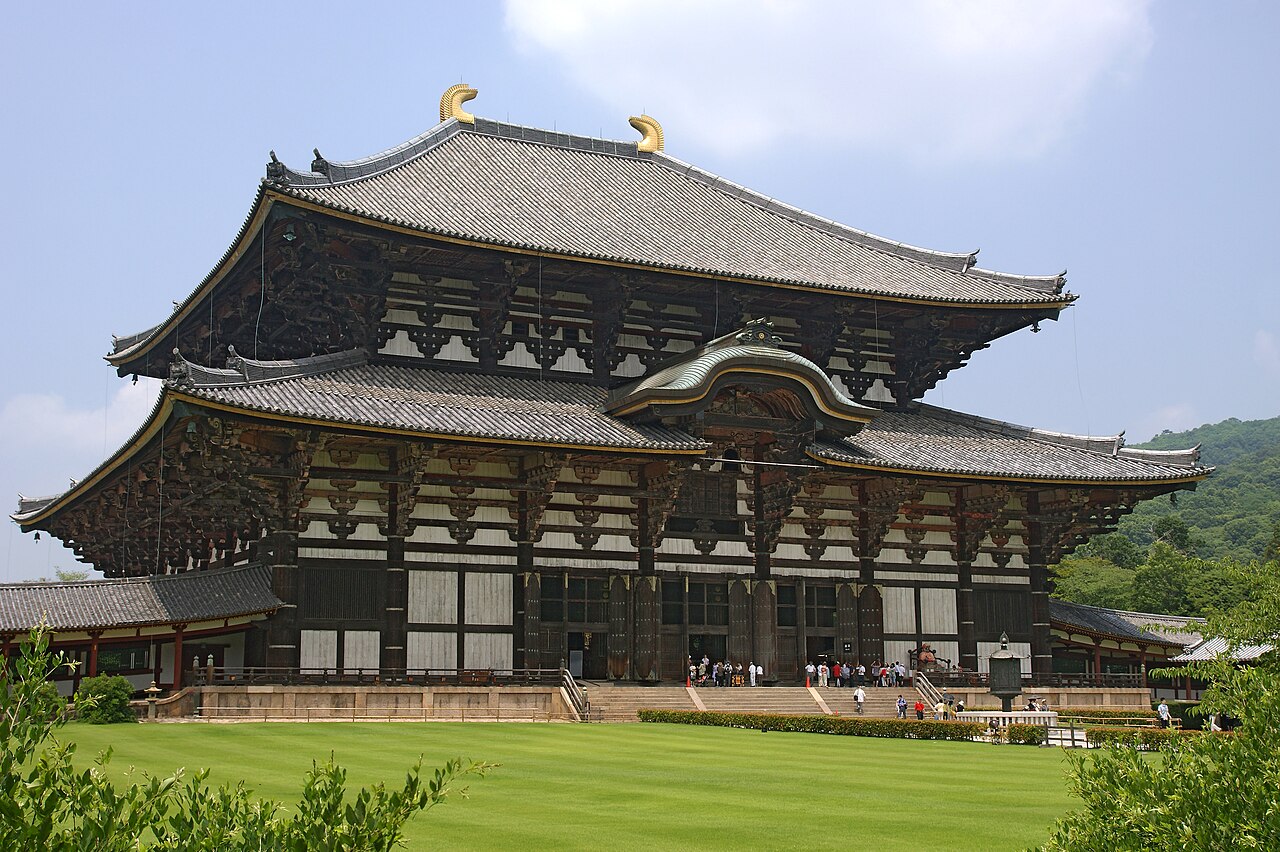
Nara Park
Feed the deer only the special deer biscuits (shika senbei), one at a time and quickly. Deer may bite when excited and will try to eat plastic bags, maps or pamphlets. Male deer with antlers can be aggressive, especially in autumn. Visit Nara's official tourism site notes that spring and autumn are the most comfortable seasons, with average temperatures of about 15 to 20 degrees C, while summer is hot and humid.
Todai-ji
The Great Buddha Hall houses a huge statue of the Vairocana Buddha. Visitors can look around without taking part in worship. Personal photos are allowed along the approach and inside the hall, but group photos, tripods and flash are not. The full route around the temple takes about four hours even at a quick pace, so if time is short, focus on the Great Buddha Hall and keep the rest for after prayer.
Kasuga Taisha
You may walk the grounds of Kasuga Taisha freely; entry to the Main Hall area needs a fee. The hanging lanterns along the corridor are lit only twice a year, on February 3 and August 14 to 15, and these nights are very busy.
Prayer nearby: the NARA Visitor Center & Inn, near Sarusawa Pond in central Nara, has prayer rooms. The Nara City Tourist Information Center, in the former JR Nara Station building, has a prayer room open from 9:00 to 17:00.
NARA Visitor Center & Inn Prayer Rooms
Nara City Tourist Information Center Prayer Room
Osaka: Osaka Castle and Dotonbori
Osaka has several prayer rooms in its big station and shopping areas, and is a handy base for Nara and Himeji.


Osaka Castle
The main tower is a museum, with elevators that make the visit easier on your legs. Eating or drinking inside is not allowed; for a break, there are cafes elsewhere in the park, such as at JO-TERRACE OSAKA and MIRAIZA OSAKA-JO. There is no prayer room we have verified in the park itself, so many travellers pray before they go or at Osaka Station City afterwards.
Dotonbori and Namba
Dotonbori's neon canal is best after dark. JNTO notes that the area has several Muslim-friendly restaurants, naming MOMO's Cafe & Restaurant. Most stalls sell takoyaki and okonomiyaki, which may contain pork or be cooked on shared grills, so ask first. At Kuromon Market, JNTO mentions a few Muslim-friendly stalls, mostly selling seafood; go in the morning, before the midday crowds.
Prayer nearby: Namba CITY has a prayer room on the Main Building B1F; sign up at the information desk on B2F (reception 11:30 to 20:00). In Umeda, Osaka Station City has a prayer room with wudu facilities on the South Gate Building 1F; register first at Osaka Station City Information on North Gate Building 3F.
Namba CITY Prayer Room
- Ask at reception first
Osaka Station City Prayer Room
- Wudu (ablution) area
- Separate spaces for men and women
- Ask at reception first
More options, including Hankyu Umeda and the Tempozan Marketplace near the Kaiyukan aquarium, are on the Osaka prayer rooms page. Check Osaka prayer times before you plan the evening.
Hiroshima and Miyajima (Itsukushima Shrine)
Miyajima is about 30 minutes by train from Hiroshima Station to Miyajimaguchi, then a 6-minute walk and a 10-minute ferry.
 UNESCO World HeritageItsukushima Shrine (Miyajima)Hiroshima→
 UNESCO World HeritageMount Misen (Miyajima)Hiroshima→
Timing your visit
At low tide you can walk right up to the Great Torii; at high tide its base is under water and the gate seems to float. Check a tide table to choose your time, and if you can, stay long enough to see both. The shrine corridors have small gaps between the floorboards, so wear flat, comfortable shoes. For views over the island, take the ropeway up Mt Misen. Autumn is a classic season here, with some 700 maple trees in Momijidani Park.
Prayer and food on Miyajima
Miyajima is one of the best-prepared island destinations. According to JNTO's Muslim guide, Yamaichi Bekkan, a restaurant and hotel about 1 minute's walk from the port, has a prayer space and prayer mat and prepares some dishes with Muslim-friendly ingredients. The TOTO Miyajima Omotenashi Restroom, about 6 minutes' walk from the port, has a multi-purpose room on the 2nd floor that can be used for prayer if you tell the staff. On Omotesando Shopping Street, JNTO lists Yamadaya as selling halal-certified momiji-manju and shakushi-senbei.
Yamaichi Bekkan Prayer Space (Miyajima)
TOTO Miyajima Omotenashi Restroom Multi-purpose Room
- Ask at reception first
Himeji Castle
Himeji Castle, a UNESCO World Heritage site, is a popular day trip from Osaka or Kobe. It is open from 9:00 to 17:00 (last entry 16:00) and closed on December 29 and 30.

Outdoor shoes are not allowed inside the buildings, so bring a shoe bag and thick socks or comfortable indoor shoes. The castle says reaching the main keep is like climbing a small mountain, and the stairs inside are very steep and narrow. The interior has no air conditioning and the only drinks vending machine is just inside the entrance gate, so carry a covered drink.
Prayer nearby: Shinki Bus runs a free prayer room it calls the Himeji Ekimae prayer room, open 9:30 to 18:00 and closed over the New Year holidays. It is open to anyone, men's and women's sections are separate, and you fill in a form at reception; ask there if you need water for wudu or a prayer mat. Check the company's page for the exact location. If you are staying in Kobe, see the Hyogo prayer rooms page for options there.
Muslim friendly places to visit in Japan: a sample route
This is one way to string the classics together. Adjust it to the prayer times on the day.
- Tokyo day 1: Fajr at your hotel, Tokyo Skytree early, Senso-ji and Asakusa, Dhuhr at the Asakusa mosque, Ueno or Akihabara in the afternoon.
- Tokyo day 2: Meiji Jingu in the morning, Dhuhr at Tokyo Camii, Shibuya in the afternoon and evening with Maghrib at Shibuya PARCO.
- Fuji day trip: Lake Kawaguchiko and Oishi Park, Dhuhr and lunch at Fujikawaguchiko Masjid.
- Kyoto days: Fushimi Inari early, Kiyomizu-dera and Gion with a booked prayer slot, then Arashiyama on another day with lunch and prayer at Yosiya.
- Nara day trip: Nara Park, Todai-ji and Kasuga Taisha, with prayer at the NARA Visitor Center & Inn.
- Osaka: Osaka Castle in the morning, Namba and Dotonbori in the evening, with prayer at Namba CITY.
- Add-ons: Miyajima at the right tide, and Himeji Castle on the way between Osaka and Hiroshima.
Frequently asked questions
Can Muslims visit temples and shrines in Japan?
Yes. Japan's famous temples and shrines are open to visitors of any faith, and official sites such as Meiji Jingu and Todai-ji say you may simply look around. Many Muslims enjoy them as history and architecture and choose not to take part in rituals such as bowing, incense or buying charms.
Which classic city is easiest for prayer?
Tokyo has the most options: mosques in Asakusa, Okachimachi and Shibuya, and prayer rooms at Tokyo Skytree, Shibuya PARCO and Tokyo Station. Osaka and Nara are also well covered. Kyoto needs the most planning, so book a prayer slot or choose a hotel with a prayer room.
Is there a prayer room at Fushimi Inari or Kiyomizu-dera?
We have not found a prayer room inside either site. Kyoto City's Muslim page lists the Yumeyakata Gojo kimono shop as a nearby option with a prayer mat and qibla direction, but it prefers advance booking. Pray before you go, or plan your visit between two prayer times.
When is the best time of year to see these sights?
Spring and autumn are the most comfortable; Nara's official site gives average temperatures of about 15 to 20 degrees C in these seasons. They are also the busiest. Early starts help: Tokyo Skytree's observation deck is emptiest first thing in the morning, and Kiyomizu-dera opens at 6:00.
Can I find halal food near the famous sights?
Yes, in the big cities. Use the official lists from the Tokyo Muslim Travelers' Guide, Kyoto City's Muslim page and JNTO's Muslim guide, and check with each restaurant. Street food at sights often contains pork or alcohol-based seasonings, so ask first.
How long should I allow for each sight?
Roughly: an hour for Meiji Jingu, two to three hours for the full Fushimi Inari loop, about four hours for all of Todai-ji, and half a day or more for Miyajima. Build your prayer times into these blocks rather than squeezing them in at the end.
Plan the rest of your trip
Before you go, read how to find a place to pray in Japan, learn a few useful Japanese phrases for Muslim travelers for asking about prayer rooms and ingredients, and keep reading food labels in Japan handy. Then browse the prayer rooms for Tokyo, Kyoto, Nara, Osaka and Hiroshima, and check today's prayer times for each stop.