

Japan Travel Budget for Muslims: Plan Your Costs
Last checked: 6 Nov 2026
A useful Japan travel budget for Muslim travelers starts with the arrangements you actually need: suitable meals, accommodation that works for your party and a route that does not create unnecessary journeys. There is no single daily amount that fits every Muslim visitor. A solo traveler eating out, a family using a kitchen and a couple booking several special meals will have different costs.
This guide explains how to build your own budget, compare alternatives fairly and identify expenses that are easy to miss. The worked example is a calculation exercise, not a survey of current market prices. Replace its assumptions with quotes for your dates before deciding what you can afford.
Separate the trip into six cost categories
Keep accommodation, food, local transport, intercity travel, activities and other expenses separate. This makes it easier to see why one plan costs more than another. If everything is folded into a daily total, you may overlook a large one-off journey or count an included meal twice.
| Category | Unit to record | Common point of confusion |
|---|---|---|
| Accommodation | Total room cost for the party and number of nights. | Per-room and per-person prices are mixed together. |
| Food | Each person's meals, drinks and any groceries. | Breakfast is counted despite already being included. |
| Local transport | Actual daily journeys, including detours. | The hotel looks cheap but adds repeated travel. |
| Intercity travel | Tickets for the full route. | A pass is purchased before checking what it covers. |
| Activities | Admission and optional supplements. | Booking fees, equipment or extra experiences are omitted. |
| Other costs | Luggage, connectivity, laundry and a reserve. | Small repeated charges never enter the total. |
JNTO's budget guidance covers choices in transport, accommodation, eating and activities. Use it as a starting point for comparing options, then obtain current prices from the actual operators. A general travel guide cannot know your dates, room requirements or dietary arrangements. [1]
Begin with the costs that are hardest to change
List the arrival and departure points, number of travelers, room needs and any experience that is essential to the trip. These decisions shape the rest of the budget. A route with several long-distance transfers will behave differently from a stay in one region, even if the number of nights is identical.
Then identify which requirements are fixed and which are preferences. You may require a particular food-preparation arrangement while being flexible about the room view. Or you may be willing to prepare breakfast but want one special dinner. Writing that down helps you reduce costs without removing what matters most.
Avoid starting with a headline daily budget from another traveler and trying to force every choice into it. Their total may exclude flights, shopping, long-distance transport or a meal that your party would not choose. Compare like with like before treating their number as a target.
Set a booking order that protects your essential choices
Make a short list of arrangements that would be difficult to replace. For your party, that might be a room with the right sleeping layout, a specific kitchen arrangement or a meal booked for an important evening. Get enough information about these choices before spending heavily on optional activities around them.
Compare cancellation and change conditions as part of the price. A flexible option can be useful while the route is still uncertain, but flexibility only has value if its conditions match your needs. Record the actual deadline and the amount at stake. Do not assume that every booking platform or every room rate uses the same policy.
When paying in advance, distinguish the money already spent from the money you will need during the trip. Both belong in the total budget, but only one remains available for daily purchases. A traveler can have a reasonable overall budget and still experience a cash-flow problem if too many upcoming payments are overlooked.
Compare accommodation by the whole stay
Ask for the total charge for the correct number and ages of guests, room type and nights. Check which meals or services are included and what additional charges may apply. A search result's first displayed price may not describe the final arrangement you need.
For families and groups, compare the total cost of the rooms required. One larger apartment and two smaller rooms may not have the same occupancy, privacy or meal facilities. Do not divide a room price by an assumed number of people until you know the property allows that party to stay.
Location belongs in the calculation. A cheaper property may add transport fares and time every day, especially if your suitable dining options are elsewhere. Compare a realistic daily route from each property rather than relying only on distance from the main station.
Also consider the cancellation conditions. A lower non-refundable rate may not be the better choice while flights, leave dates or essential services remain unconfirmed. The point is not that flexible rates are always better, but that you should know what you are giving up for the saving.
Does a kitchen save money?
It can, but calculate the complete difference. Add any room premium, the groceries you will buy, travel to the shop, equipment you must purchase and ingredients left unused. Compare that with the meals you would otherwise pay for, not with an unrealistically expensive restaurant plan you never intended to follow.
For example, paying more for a kitchen could make sense for a family preparing breakfast every morning and several dinners. It may make little sense for a couple staying briefly and eating out most of the time. The value depends on actual use.
MIMARU's official Muslim guest information describes in-room kitchens and limited rental equipment. That gives you specific facilities to ask about, not a universal price advantage or a guarantee of availability. [2] Compare the quote and confirmed facilities for your booking.
Remember the work involved. A kitchen can offer freedom over ingredients, but shopping and cleaning still use holiday time. Agree within the group how often you want to cook before using the supposed savings to justify a more expensive room.
Build a meal budget from actual choices
Choose a few representative days and list breakfast, lunch, dinner and any drinks or snacks. Use real menu prices where available and confirm special-course prices directly. Include the dietary arrangements you require rather than assuming a standard menu can be substituted without cost or notice.
You do not need every meal to be a premium Japanese dining experience. Decide which meal or two is a highlight and make the rest practical. A memorable dinner can fit a reasonable budget when it is planned deliberately instead of becoming a nightly expectation.
Do not assume that vegetarian, seafood-based or no-pork dishes meet every requirement. Research the particular meal before using it as the cheap option in your calculation. A low menu price is not useful if the dish turns out not to suit you.
Check what a price includes: portion size, rice, drinks, dessert or other accompaniments. Two restaurants advertising a similar main dish may offer very different complete meals. If an additional service charge or tax treatment is unclear, ask before comparing totals.
Allow for the route to food and prayer
A meal on the opposite side of a city may cost more than its menu price suggests. Add transport, walking time and any disruption to the day's other bookings. Choosing accommodation near several workable options can be more valuable than finding one low-priced restaurant far away.
The same applies to prayer arrangements. A free room that requires a separate cross-city trip may not fit a tightly timed day. Plan attractions, meals and prayer together so that you are not repeatedly paying for journeys created by an avoidable mismatch.
This does not mean choosing the nearest option regardless of your requirements. It means comparing the complete route between options you would genuinely use. If a particular restaurant or mosque is important to the trip, plan nearby activities rather than treating the journey as wasted time.
Prayer rooms are listed for each area on this site, for example Tokyo and Kyoto. Knowing where they are helps you avoid unplanned taxi rides.
Compare rail passes with the journeys you will take
Write down every intercity journey first, then check point-to-point tickets and the passes that might apply. Confirm the operator, covered route, eligibility, reservation conditions and any additional charge. A pass with a familiar name may not cover the service you intend to use.
The official JAPAN RAIL PASS price page listed the seven-day Ordinary adult pass at ¥50,000 when checked on 5 November 2026. Prices and conditions must be rechecked before purchase. [3] This is a comparison point, not a recommendation that every one-week visitor should buy it.
If your covered journeys would cost less as separate tickets, the pass may not save money. If a pass makes sense financially, still check whether its rules work with the trains and schedule you want. Do not add journeys only to make a pass appear worthwhile if they are not part of the trip you want.
Keep local transport separate unless it is actually covered. A national or regional rail product does not automatically remove every subway, private railway, bus or taxi expense in the destination.
Check luggage costs before choosing the cheapest transfer
An airport transfer or long-distance trip can involve additional considerations when you have large bags. Check permitted luggage, storage arrangements and any reservation or delivery costs for the service. JR Central provides current Shinkansen baggage information on its official site. [4]
A cheaper route with several awkward transfers may be poor value for a family with children and luggage. Conversely, a direct service may be worth paying more for even when the travel time is not dramatically shorter. Compare the journey you can manage comfortably, not just the smallest number on a fare screen.
If you use luggage forwarding, include the charge and the period when you will be without the bag. You may need a smaller bag for essentials. Confirm delivery timing rather than assuming it will arrive whenever you do.
A worked example: two adults, six nights
The following numbers are invented planning assumptions, not current quotes or an expected price range. They demonstrate the arithmetic for a seven-day trip with six nights. Replace every line with your own prices. International flights, insurance, visas where applicable and shopping are excluded.
| Item | Illustrative calculation | Subtotal |
|---|---|---|
| Accommodation | One room × ¥14,000 × 6 nights | ¥84,000 |
| Meals and drinks | 2 adults × ¥3,500 × 7 days | ¥49,000 |
| Local transport | 2 adults × ¥1,000 × 7 days | ¥14,000 |
| Intercity tickets | Assumed total of ¥16,000 per adult × 2 | ¥32,000 |
| Paid activities | 2 adults × ¥2,000 × 4 selected activities | ¥16,000 |
| Connectivity, laundry and miscellaneous items | Assumed combined allowance | ¥8,000 |
| Planned expenditure | Sum of the six lines above | ¥203,000 |
| Separate reserve | Illustrative allowance | ¥20,000 |
| Total funds allocated | Planned expenditure plus reserve | ¥223,000 |
The calculation does not mean ¥223,000 is enough for every two-person trip. Its value is that you can see what was counted. If your room costs more, you take another long-distance train or you choose a special dinner, change the relevant line rather than hoping the daily average absorbs it.
Use the example to compare alternatives
Suppose you receive a kitchen-equipped room quote that is ¥3,000 more per night for the party. Over six nights, that adds ¥18,000. To decide whether it is worthwhile, compare it with the restaurant spending you would genuinely avoid, then add groceries and other costs. Do not assume the kitchen pays for itself simply because breakfast can be cooked.
Suppose another accommodation quote saves ¥2,000 per night but adds ¥800 of transport per day for the party. Over the same six nights and seven travel days, the initial ¥12,000 saving is reduced by ¥5,600 of additional transport, leaving ¥6,400 before considering extra time. These are fictional figures used to show the method.
You can apply the same approach to a taxi, direct airport train or luggage service. Identify the change in total cost and the practical benefit. A decision can be good value without being the cheapest possible option.
Compare upgrades by the problem they solve
An upgrade is easier to assess when it has a specific purpose. A larger room may let a family eat comfortably, a more convenient location may reduce repeated journeys, and one special meal may be a meaningful highlight. Ask what changes in the actual day rather than treating every upgrade as either wasteful or automatically worthwhile.
Use the same approach for savings. Before deleting an expense, ask what replaces it. Removing breakfast from the accommodation bill only saves the full amount if the alternative breakfast has no cost. Dropping a kitchen may reduce the room price while increasing meal spending. Write down the complete change so that the comparison stays honest.
For a group, discuss these decisions before one person makes all the bookings. Agree on which expenses are shared and which are optional individual purchases. A common budget works better when a companion can decline an expensive extra without disrupting the arrangements everyone depends on.
Costs that are easy to leave out
- Airport journeys at both ends, including early or late alternatives.
- Seat reservations or other ticket supplements that apply to your chosen service.
- Food on arrival and departure days.
- Laundry, drying and any needed supplies.
- Luggage storage or forwarding.
- Mobile data or other connectivity arrangements.
- Extra equipment or clothing required for a booked activity.
- Cancellation charges and changes to prepaid bookings.
- Taxes or other charges not already included in your quoted total.
Do not add every possible cost automatically. Mark whether each applies and whether it is already included elsewhere. The objective is a complete budget, not a frightening list that counts the same expense several times.
Plan a reserve with a purpose
A reserve is useful for a missed connection, a necessary taxi, an extra meal or a small booking change. Choose an amount appropriate to the flexibility of your trip and keep it separate from optional shopping money.
Think through one realistic disruption. If your transport stops running or an essential meal option is closed, what would you do and what might it cost? You do not need a detailed prediction of every problem; one or two concrete scenarios can expose where the plan has no practical backup.
Insurance and assistance arrangements should be assessed separately according to your needs and the policy terms. A cash reserve does not replace appropriate cover, and a policy does not mean every ordinary travel change will be reimbursed.
Avoid false economies
A very cheap room is not necessarily good value if it creates difficult travel every day. A low-priced meal is not a saving if it does not meet your requirements. A crowded schedule of prepaid activities can also cost more when you cannot comfortably attend them all.
Spend on the things that remove real friction: a workable location, a suitable confirmed meal or a transport arrangement your party can manage. Reduce costs in areas you care less about, such as unnecessary hotel moves, duplicate shopping trips or activities added only because they are famous.
JNTO's wider budget-travel guide discusses a range of accommodation and transport choices. [5] Use that variety to build the holiday you want, rather than assuming that budget travel must follow one particular style.
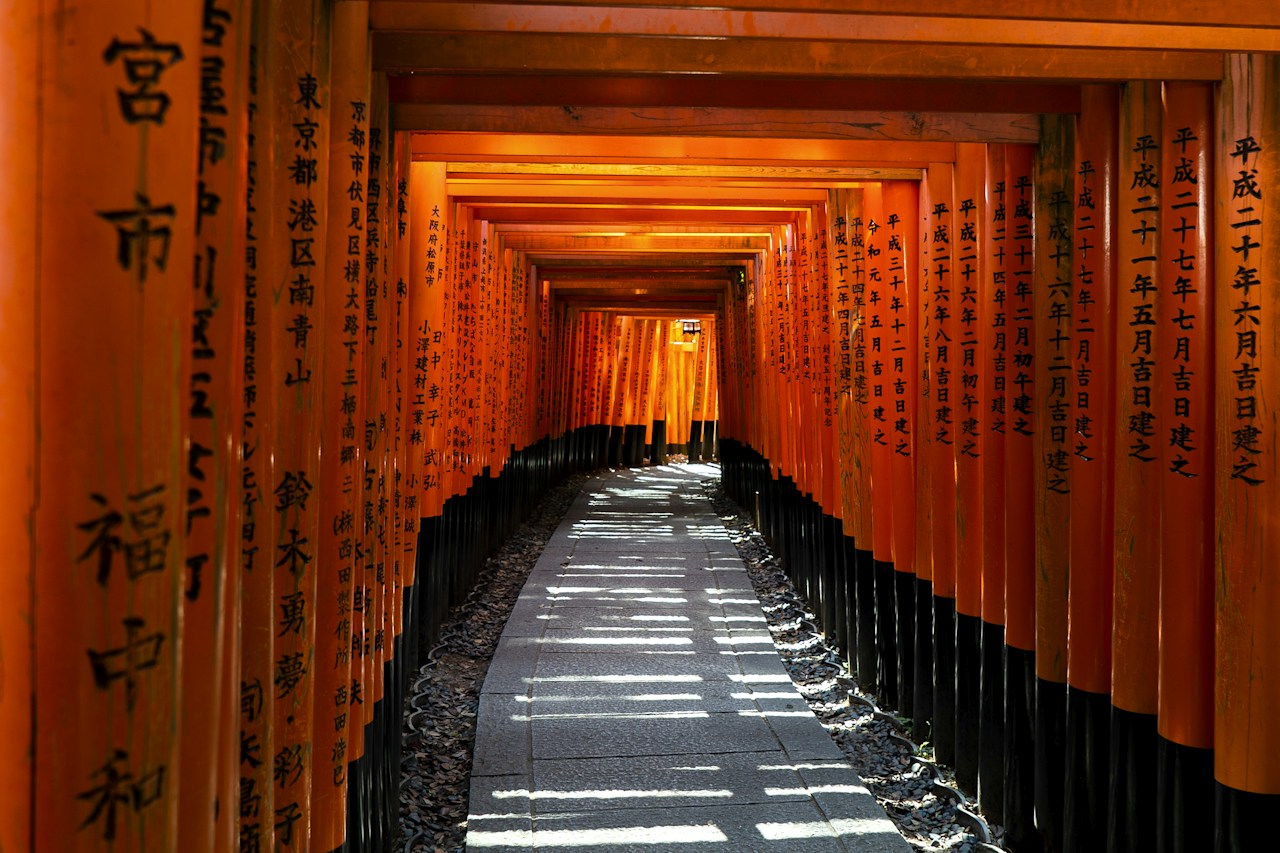
Some major sights charge nothing to walk around, such as Fushimi Inari Taisha and the Philosopher's Path in Kyoto. Check each official site for current conditions. For a full route, see our 7-day Muslim friendly Japan itinerary.

Traveling with children or a larger group
Record the actual ages and applicable booking conditions for every traveler. Do not assume all children receive the same fare, admission rule or meal price. Accommodation may also distinguish between sharing a bed and requiring a separate bed or meal.
For groups, agree which expenses are shared. A taxi fare, room charge and individual meal should not all be divided the same way without discussion. Keep a simple record so the person making bookings does not have to remember every payment.
Group savings can disappear if everyone wants a different schedule and needs separate transport. Plan a few shared anchors, then allow independent time where appropriate. Financial clarity makes that flexibility easier.
Track spending without letting it dominate the trip
Review the total briefly each evening or after a major transfer. Record categories rather than every tiny detail if that is sufficient for you. Check whether actual spending is different because prices changed or because the plan changed; the response may be different in each case.
If meals cost more than expected, research a few suitable alternatives rather than skipping essential arrangements. If shopping is the reason the total is rising, do not describe that as a general increase in the cost of Japan travel. Keep optional purchases visible in their own category.
Use the budget to make choices, not to criticize another person for needing food, rest or a different transport arrangement. Agree on a comfortable plan before the trip and revisit it calmly if circumstances change.
Keep receipts useful without turning the holiday into accounting
You do not need to record every small purchase in detail to learn whether the plan is working. Track the categories most likely to drift: food, transport and discretionary shopping. A short daily total can be enough to show whether the remaining allowance needs adjustment.
Keep booking confirmations and receipts that may be needed for a change, refund or expense reconciliation. Separate those from casual spending notes so you can find an important document quickly. At the end of the trip, compare the few largest assumptions with what you actually spent. Use that personal evidence for your next visit instead of treating one holiday's total as the price every Muslim traveler should expect to pay.
A planning worksheet to complete
Write the number of people, days and nights at the top. For each cost, include the source of the quote, what it covers, whether it is refundable and the date you checked it. Use one currency for the main comparison, and record conversion assumptions separately if needed.
Keep both “booked” and “estimated” columns. A confirmed accommodation payment and a rough meal allowance have different levels of certainty. Before departure, replace major estimates with actual bookings or current quotes where possible.
Finally, add the excluded costs explicitly: international flights, shopping or anything paid separately. This prevents a partial ground budget from being mistaken for the total cost of the holiday when you discuss it with your family.
Frequently asked questions
Is Japan more expensive for Muslim travelers?
There is no single answer. Specific food or preparation requirements can affect your options, but the route, location, room setup and meal choices also shape the total. Compare the arrangements you would actually use.
Should I buy a rail pass before planning the route?
No. List the journeys first, then compare current tickets and relevant pass conditions.
Can I use the sample budget as a price quote?
No. Its numbers are illustrative assumptions for learning the calculation. Obtain actual prices for your dates and requirements.
Is the cheapest accommodation always best for a limited budget?
Not necessarily. Include repeated transport, suitable dining access and the practical demands of the location.
What should I book first?
Set the route and essential requirements, then secure the major arrangements whose availability or price most affects the trip. Check conditions before making non-refundable commitments.
A good budget makes the important arrangements visible. Price the trip you genuinely want, compare complete alternatives and keep enough flexibility to respond when the day does not go exactly as planned.
Sources and checks
Official sources reviewed on 5 November 2026. Published services, prices and event arrangements can change. Examples of questions and planning routines are editorial suggestions, not statements of religious certification.
- JNTO: Tips for budget travel — General comparison ideas, not current quotes.
- MIMARU: Muslim-friendly services — Published kitchen facilities; not a claim about prices or availability.
- JAPAN RAIL PASS: Official prices — Seven-day Ordinary adult price checked on 5 November 2026; recheck before purchase.
- JR Central: Shinkansen baggage guidance — Consult current baggage arrangements.
- JNTO: Japan on a budget — Accommodation and transport comparison context.