Nijo-jo Castle
- Ask at reception first


UNESCO World Heritage
二条城
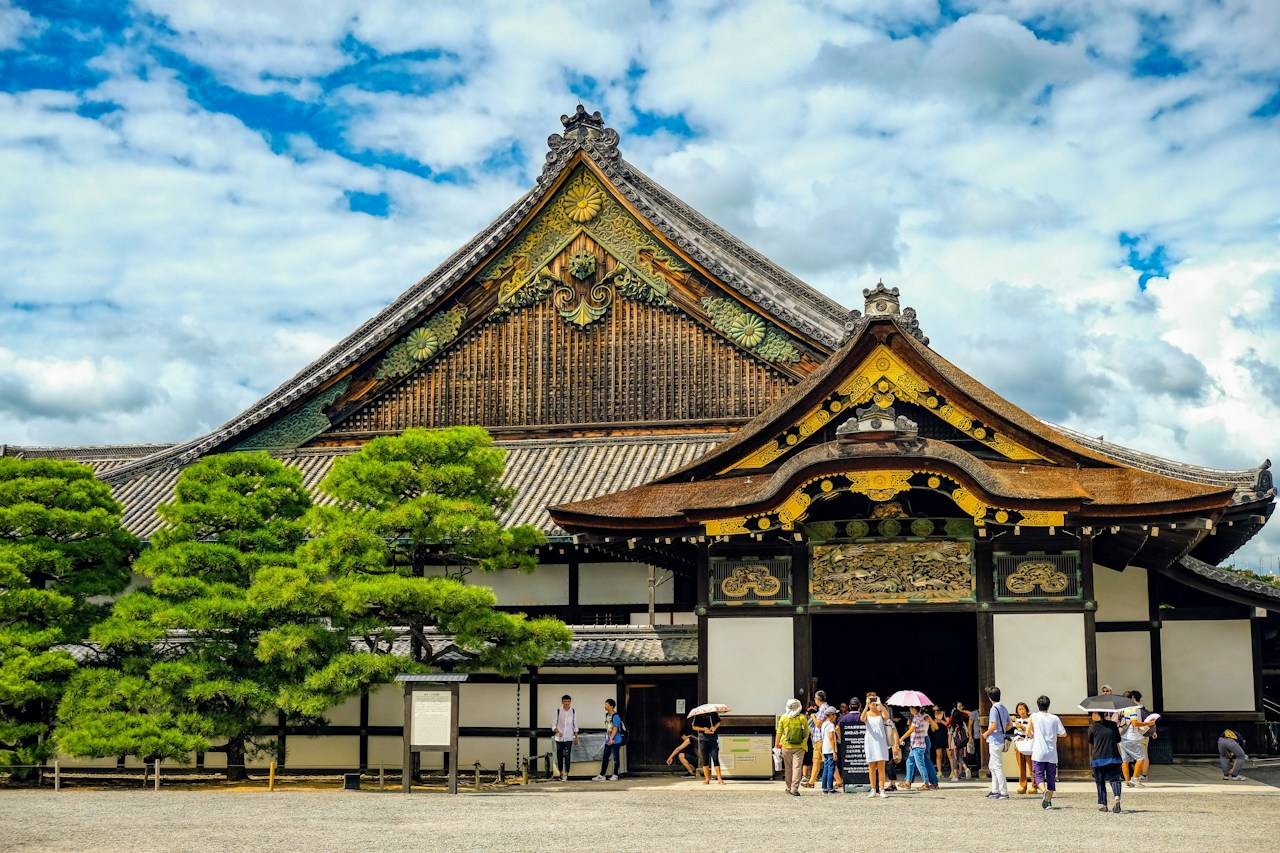
Nijo-jo Castle was completed in 1603, when the shogun Tokugawa Ieyasu first entered it, and it saw the rise and fall of the Tokugawa family. In 1867 the last shogun, Yoshinobu, announced here his intention to return power to the emperor. The Ninomaru-goten Palace, a National Treasure, is the only surviving example of a fortified palace complex and holds over 3,600 wall paintings. Its corridor floorboards make a sound like a nightingale's song when you walk on them. The castle has been a UNESCO World Heritage site since 1994 and is known for its cherry blossoms in spring.
Entry 8:45–16:00; the castle closes at 17:00. Ninomaru Palace: 8:45–16:10. Honmaru Palace: 9:30–16:00 (online reservation required).
The castle is closed December 29–31. Ninomaru Palace is also closed on Tuesdays in January, July, August and December, December 26–28 and January 1–3.
Castle grounds: adults 800 yen, junior and senior high 400 yen, elementary 300 yen. Grounds + Ninomaru Palace: adults 1,300 yen. Honmaru Palace: adults 1,000 yen extra (reservation required).
Subway Tozai Line: Nijojo-mae Station (from Kyoto Station take the Karasuma Line and change at Karasuma Oike). City Bus 9 or 50 from Kyoto Station. JR Nijo Station is about 17 minutes on foot.
Ninomaru Palace and garden: about 1 to 1.5 hours. A full visit takes about 2 to 2.5 hours.
Hours and fees can change. Please check the official website before you go.
Today (5 Nov 2026)
Times are calculated for central Kyoto. Times may differ elsewhere in Kyoto.
We have not verified a halal restaurant near here yet. Until then, these guides can help you choose food safely:
Distances and walking times are estimates based on straight-line distance.
No reviews yet. Be the first to share your visit.
Is something wrong or out of date? Please tell us so we can check again. Contact us →
Photo: Eleonora Albasi, Unsplash License, via Unsplash
Sources (Checked 5 Nov 2026): nijo-jocastle.city.kyoto.lg.jp, kyoto.travel, pref.kyoto.jp