

Japan Souvenirs for Muslim Friends: What to Check
Last checked: 6 Nov 2026
Choosing a Japanese gift for a Muslim friend is easiest when you start with the person receiving it. Do they enjoy tea, cooking, stationery or handmade objects? Do they prefer certified food products, or would a non-food souvenir be more useful? A small gift that fits their preferences is better than a famous snack they cannot confidently eat.
This guide covers how to choose, check and pack gifts. It does not label whole brands or categories as halal. For edible gifts, use information about the exact product you are buying and leave the recipient enough information to make their own decision.
Choose the gift category before choosing the shop
Souvenir shopping becomes time-consuming when every attractive box creates a new ingredient question. Before going out, divide your recipients into groups: people who would welcome a food gift, people who would prefer a practical item and people whose preferences you should ask about.
If you need many gifts, choose one or two clearly documented products rather than six unfamiliar assortments. For a close friend, a personal object or a tea chosen for the way they drink it may mean more than the most expensive presentation box.
| Gift idea | What to consider |
|---|---|
| Tea | Exact ingredients, brewing equipment and the recipient's taste. |
| Packaged sweets | Product-level ingredients, certification if required, and shelf life. |
| Seasonings or sauces | Full composition, intended use and transport restrictions for liquids. |
| Textiles | Material, size, care instructions and design preferences. |
| Stationery | Whether it will be useful, refill availability and ease of carrying. |
| Ceramics or craft objects | Weight, fragility, intended use and protective packaging. |
Make a small recipient list before you shop
A souvenir list becomes much easier to use when it contains preferences rather than just names. For each recipient, note whether you want a food or non-food gift, the approximate amount you intend to spend, and anything that would make the item inconvenient. A beautiful cup may be unsuitable for someone with limited storage, while a large tea tin may be wasted on someone who rarely drinks tea.
For food, add the recipient's information preference: do they want a recognized halal certification, a manufacturer response about specific ingredients, or a different kind of gift altogether? Ask without suggesting that one answer is more sophisticated than another. The purpose is to select a comfortable gift, not to debate the recipient's standards.
| Recipient | Useful preference to record | Practical check |
|---|---|---|
| A tea enthusiast | Which kind of tea they enjoy and how they prepare it | Whether they already have suitable brewing equipment |
| A colleague | Whether the gift is personal or intended for a team | How product information will accompany individual portions |
| A child | Interests and any requirements confirmed by their parent | Age suitability and the information printed on the product |
| A host family | Something useful or connected to a shared memory | Space, breakability and ease of carrying it home |
You can keep this list on your phone and update it as you buy. Record the exact item, not simply “tea bought.” That prevents accidental duplicate purchases and makes it easier to match a product photograph or manufacturer reply to the correct gift later.
Five gift combinations to adapt to the person
For someone who enjoys a daily cup of tea
Choose a tea with clear product information and add a short preparation note. Before buying loose leaves, consider whether your friend owns an infuser or teapot. If not, a suitable packaged tea-bag product may be easier to use. Check that product separately; do not assume its ingredients are identical to a loose-leaf version.
You could pair the tea with a small cup, but choose a cup intended for the way they drink it. A tiny tasting vessel is not necessarily a practical replacement for a large breakfast mug. The aim is a thoughtful daily object rather than an impressive collection that remains in its box.
For a colleague you do not know very well
A useful notebook or carefully chosen pen avoids guessing dietary preferences. Keep the design neutral if you do not know their taste, and consider whether Japanese text on the object has a meaning you can explain. If the gift is part of an office exchange, consistency of thoughtfulness matters more than giving everyone an identical food product.
If you do choose snacks, label the specific items and keep the original packaging. Do not describe an assortment as checked if you have only researched one flavor.
For a friend who cooks
A small piece of tableware, a textile for the table or a practical kitchen object can be more useful than a sauce whose ingredients require further research. Ask the seller how the item is intended to be used and cared for. Choose something your friend can maintain with the equipment they have at home.
If a seasoning is the main gift, add a suggested use without implying that every recipe using it is suitable. Confirm the exact product's ingredients and let your friend decide how it fits their cooking.
For a child or a family
Consider the child's age, interests and the space available for carrying the gift home. A stationery set or small craft object may be easier for the family than a fragile display piece. Check the manufacturer's age guidance for toys and small parts rather than assuming that a souvenir intended for tourists is appropriate for every child.
Food gifts for a family need more than one question: halal requirements, allergies, personal preferences and whether everyone can share the same item. Ask a parent beforehand when the answer matters. Religious suitability is not a substitute for allergy information.
For someone who prefers fewer possessions
A small quantity of a carefully researched tea or another consumable they already enjoy may be more welcome than a decorative object. If no edible option can be confirmed, a postcard with a personal message can still be meaningful. Do not buy a larger gift solely to make the present look substantial.
Tea: compare plain leaves with flavored products
Plain tea can be a useful starting point because some products have a short, clearly stated ingredient list. For example, Ippodo's official Organic Matcha 20g Box page lists Japanese green tea as its ingredient. That is an ingredient statement about that product, not a halal certificate for every Ippodo item or every matcha-flavored food. [1]
A matcha latte powder, chocolate or cake is a different product. It can contain additional ingredients even when the front of the package emphasizes tea. Read the product's own information instead of transferring what you know about plain tea to a flavored confectionery.
Kyoto's official regional tourism information describes the Uji tea area's traditions in matcha, sencha and gyokuro. [2] You can use that background to choose a gift with a sense of place, then check the particular package before buying.
Think about how your friend will prepare it. Loose leaves need a suitable way to brew them, while matcha may require tools or a method the recipient does not usually use. A simple brewing note can make the gift more useful than elaborate packaging alone.
If certification is essential to the recipient, seek evidence for the product rather than treating a short ingredient list as a substitute. If you cannot confirm what they need, choose another gift without presenting the uncertainty as their responsibility to solve.
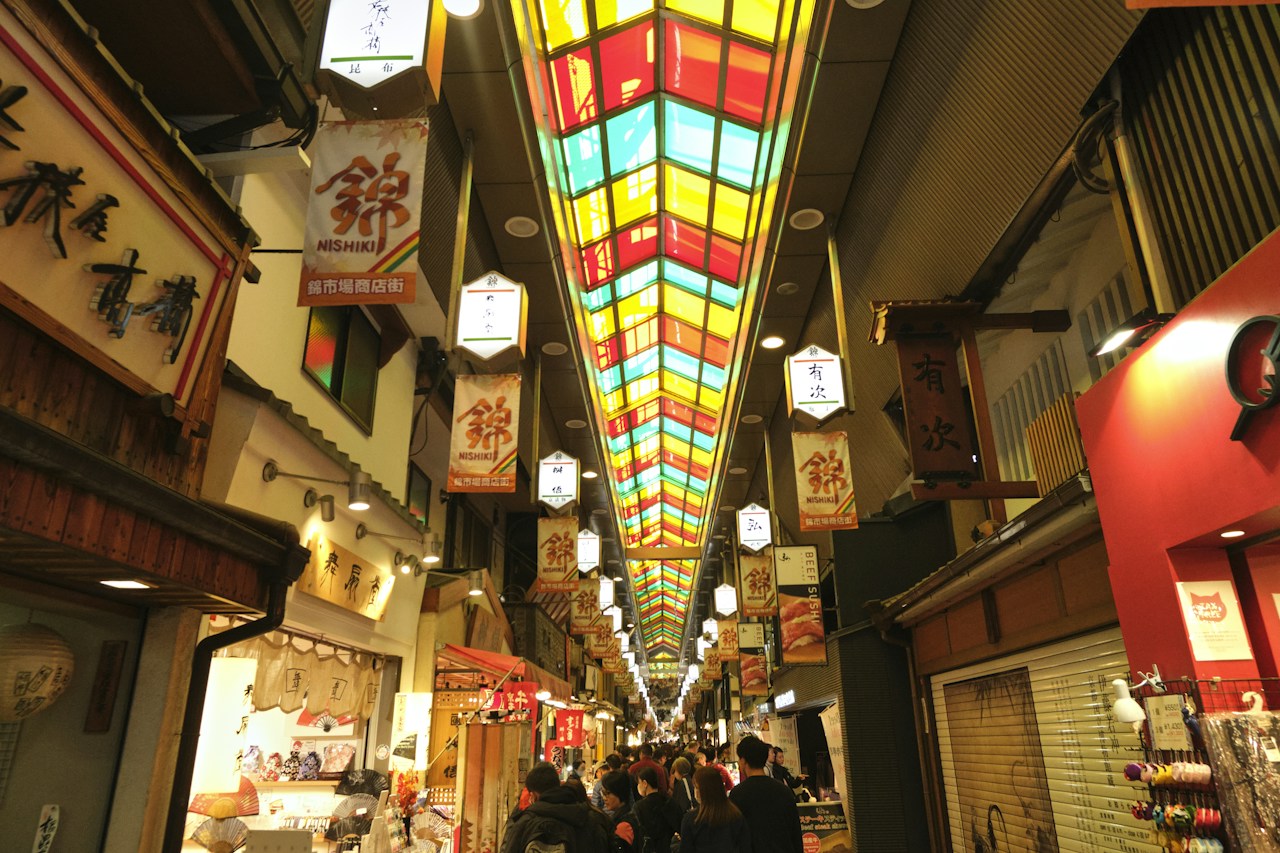
If you shop in Kyoto, Uji to the south is known for its tea, and Nishiki Market in the city center sells many food souvenirs. The same checks apply there: read the label of the actual product you buy.

Sweets: check every item in an assortment
A mixed box may contain several recipes. The ingredients of one flavor do not establish the others, and a familiar brand name does not mean a seasonal edition has the same composition. Match the information to the flavor, package size and version you are purchasing.
Ask about ingredients such as gelatin, shortening, emulsifiers, alcohol and flavorings where their source or use matters to your recipient. A staff member may need to consult the manufacturer, particularly when ingredients come from a supplier rather than being prepared in the shop.
Do not rely solely on a display label saying “no pork.” It may not address alcohol, the origin of additives or preparation conditions. Similarly, allergen information answers a different set of questions from halal suitability.
For unpackaged sweets, ask whether a written ingredient list is available. If the answer is only verbal, consider whether you can pass that information on accurately. A sealed product with clear documentation may be more suitable for a gift that will be opened by somebody else days later.
How to verify a food gift without spending the whole day researching
- Identify the exact item. Photograph the front, product name and ingredient panel.
- Check the manufacturer's page. Compare it with the package in your hand.
- Clarify the unresolved point. Ask a focused question rather than requesting a general guarantee.
- Check certification if required. Confirm the product and scope covered by the document.
- Keep the evidence with the gift. Preserve the original label and a short note about what you confirmed.
If a product cannot be checked in the time available, move on to another category. Your friend is unlikely to enjoy a gift more because you spent your last evening worrying about an unclear ingredient.
Ask manufacturers a question they can answer
A broad question such as “Is everything you make halal?” can be difficult for customer support to answer. Give the exact product name, package or barcode if available, and ask about the specific unresolved ingredient. If your question concerns certification, ask whether the actual product is covered and where you can see the relevant information.
I am considering buying [exact product] as a gift. The ingredient list includes [ingredient]. Could you tell me its source and whether alcohol is used in this product? If the product has halal certification, please identify the certifying organization and the product covered.
Keep a copy of the answer and its date. If the company explains that it cannot identify a source or guarantee a condition, preserve that uncertainty. Do not shorten a careful reply into a simple “halal” label that the manufacturer did not provide.
Non-food gifts can make the decision simpler
Textiles, ceramics, stationery and other crafts let you choose something Japanese without making the gift depend on a food recipe. JNTO's craft guide introduces regional traditions such as textiles, bamboo work, ceramics and lacquerware. Kyoto's official souvenir guide also discusses local tea and craft products. [3] [4]
Non-food does not mean that every object suits every person. Consider materials, religious symbolism, images, practical use and personal taste. If a design has a meaning you do not understand, ask the seller rather than describing it as simply decorative.
Textiles and wrapping cloths
Choose a size and material the recipient can use, and check care instructions. A wrapping cloth can be part of the present rather than disposable packaging. Avoid promising that every scarf-like item will work as a hijab: dimensions, transparency, texture and comfort all matter.
Stationery
A notebook, pen or paper item is easy to personalize by color and use. If you choose a refillable pen, consider whether replacements will be available at home. A beautiful object that cannot be maintained may be less useful than a simple, practical one.
Ceramics and tableware
Ask whether the piece is intended for food use and how it should be washed. Check weight and packing before committing to a large purchase. A small cup or dish may travel more comfortably than a heavy set, particularly if you still have several train journeys ahead.
Check that a non-food gift is easy to own
Non-food does not automatically mean practical. Consider how the recipient will use, clean and store the item. A craft object with a special care requirement is a better gift when its instructions travel with it. Ask the seller about the material and intended use if those details matter to your choice; appearance alone does not tell you whether something is designed for food, decoration or another purpose.
For fragile purchases, discuss packing before paying and leave space in your luggage. A shop's gift wrapping may look attractive without being sufficient protection for your journey. Keep any care instructions outside layers the recipient might discard immediately. For clothing or textiles, confirm the actual size and care label rather than guessing from a display sample.
Symbols, illustrations and messages can also matter to an individual recipient. Choose designs with the person in mind, and ask what unfamiliar writing means before giving an item featuring it. You do not need to make a universal judgment about every motif; you need to understand the object you intend to present.
Choose for the recipient, not for an imagined “Muslim taste”
Muslims have different cultures, interests and standards for purchases. Do not assume that everyone wants a religious item, the same style of clothing or a particular flavor. A friend who loves Japanese design may appreciate everyday stationery more than a souvenir selected only because you associate it with their religion.
Ask a simple question before traveling: would they prefer a food gift with particular certification, tea or a non-food item? That can prevent a difficult last-minute search. For a surprise, use what you already know about their interests rather than assuming a universal preference.
If you are buying for colleagues, avoid making one person explain their dietary requirements in front of the whole office after receiving a shared box. Clearly identify what you have checked, and provide a non-food alternative where appropriate.
Packaging, shelf life and the journey home
Check whether food needs refrigeration and when it should be eaten. Work backward from the day the gift will reach the recipient, not simply the day you fly. A short-life sweet may spend time in a hotel room, on a train, at the airport and in luggage before being delivered.
Buy delicate or temperature-sensitive items only when you can transport them as instructed. Ask the seller how long any supplied cooling packaging is intended to work. Do not infer that a product can remain unrefrigerated because it is sold in an attractive souvenir box.
Keep ingredients and product identification intact. If you split a large pack into individual gifts, include the relevant information rather than separating the recipient from the only label. For an assortment, make clear which information belongs to which item.
Before purchasing food, plants, animal products or liquids for international travel, check the official rules of your destination, transit point and carrier as applicable. A shop's willingness to sell a product is not permission to import it elsewhere. This guide does not provide a country-by-country customs clearance list.
A practical gift-shopping plan
Make your main choices before the final travel day. Visit the shop with your recipient list, essential requirements and a realistic carrying allowance. Buy the confirmed items first, then leave optional browsing for later.
For several people, organize purchases by recipient rather than by shop. Keep a note on your phone identifying each gift, its information and where it is packed. That avoids opening every bag at the hotel to remember which tea or sweet was intended for whom.
Leave space for protective packaging. The displayed size of a ceramic item is not the size of the package you will carry. If the seller offers shipping, compare the total cost and confirm what happens if delivery is delayed or the item arrives damaged.
Check the product again at the shop
Take your saved product information with you. Compare the name, flavor and ingredient panel to the actual package. Similar designs can appear on different recipes, and a store may stock an alternative to the item you researched. If a shop assistant suggests a replacement, repeat the necessary checks instead of assuming it is equivalent.
For a gift order involving many units, inspect the contents before they are wrapped if the shop allows it. Confirm whether the box contains one product or a mixture. Ask staff to preserve any ingredient inserts when adding gift wrapping, and keep the receipt until you have checked that the purchase is correct.
This extra check is especially useful at busy transport hubs, where it is easy to choose a similarly named item while watching the time. Researching beforehand should make the purchase faster, but it does not remove the need to match the information to what you buy.
Buy gifts for an office without losing the information
Food shared at work creates an information problem: the outer box may be discarded while the individual pieces remain in a common area. Before choosing a large assortment, consider how each person will know what it contains. An individually wrapped item is convenient, but its small wrapper may not repeat everything printed on the outer package.
One option is to keep the box and its ingredient insert beside the gifts. Another is to provide a photograph or a link to the exact manufacturer's product information. Make clear which information comes from the packaging and which comes from a separate response. Do not create a homemade halal label for a product merely because you did not notice a concerning ingredient.
If the group has varied preferences and you cannot obtain enough information, a non-food gift may be simpler. Useful stationery, a small locally made object or a shared decorative item can communicate the thought behind the gift without making colleagues investigate unfamiliar food during their working day.
A sample note to include
I chose this [exact product name] in Japan because [personal reason]. The manufacturer lists [verified information], and I have kept the original label and product link with it. I could not confirm [any unresolved detail], so please choose according to your own requirements.
If an unresolved detail is central to whether the recipient can use the gift, it is usually better to select something else. The note should share useful information, not turn an uncertain purchase into an obligation to consume it.
Add a personal note without making a bigger claim
A short note explaining why you chose the gift often adds more value than elaborate packaging. You might mention the neighborhood where you found it, the recipient's interest that inspired the choice, or how the maker recommends using it. Keep factual claims tied to information you actually have.
For a food gift, a useful note might say that the original ingredients remain inside and that you have included a manufacturer link. That helps the recipient decide for themselves. Avoid replacing that information with an unqualified “definitely halal” unless you have the evidence and authority to make the specific claim you intend.
Common mistakes to avoid
- Calling an entire brand halal because one product has documentation.
- Assuming a green-tea flavor has the same ingredients as plain tea.
- Checking only the first item in a mixed gift box.
- Removing the label when dividing individually wrapped portions.
- Buying perishable food before a long day without suitable storage.
- Choosing religious symbols without understanding the recipient's preferences.
- Leaving ingredient research until the departure gate.
Frequently asked questions
Is all matcha suitable for Muslim recipients?
Check the exact product. Plain powdered tea and a matcha-flavored confectionery are different purchases. Certification requirements should be checked separately.
Are traditional Japanese sweets always free of animal ingredients?
No broad assumption should replace the recipe or ingredient information for the actual item.
Is a non-food gift a poor substitute?
Not at all. A well-chosen useful object can be more personal and easier to enjoy than an uncertain snack.
Should I buy gifts at the airport?
It can be convenient for an item you have already researched. It is less useful when you still need time to clarify ingredients, recipient preferences or transport arrangements.
The best souvenir comes with a clear reason for choosing it and enough information to use it comfortably. Choose carefully, keep the original product details and let the recipient's preferences guide the purchase.
Sources and checks
Official sources reviewed on 5 November 2026. Published services, prices and event arrangements can change. Examples of questions and planning routines are editorial suggestions, not statements of religious certification.
- Ippodo Tea: Organic Matcha 20g Box — Ingredients for this exact product; not evidence of halal certification.
- Kyoto Tourism: Uji tea — Regional tea background.
- JNTO: Local crafts — Examples of Japanese craft traditions.
- Kyoto City Tourism: Kyoto souvenirs — Tea and local craft background.